
General Contracting Services
General Contracting
Las Cruces, NM
Las Cruces, NM
Truck Courts and Dock Aprons in Las Cruces and Dona Ana County
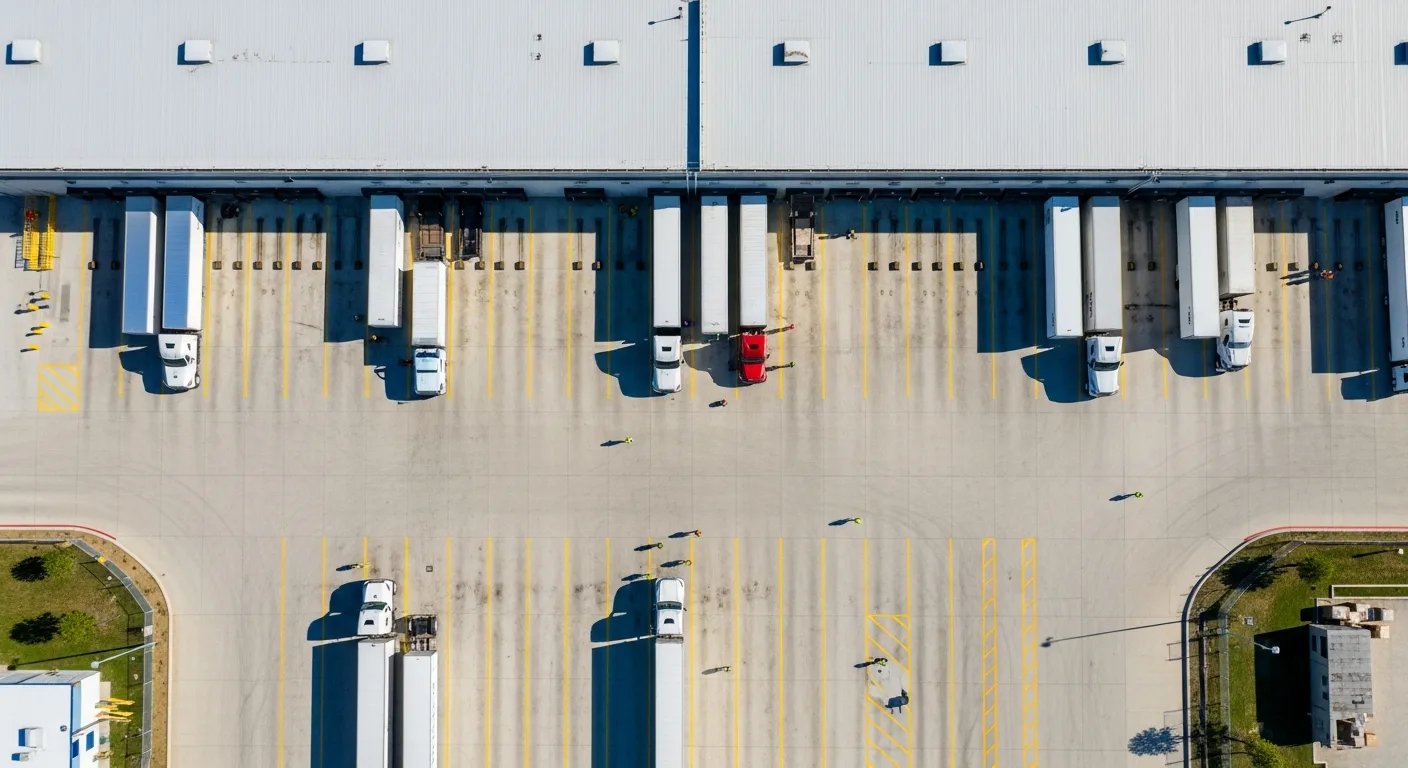
Trailer landing gear punches through asphalt in a hurry, which is why the dock side of a distribution building is usually concrete and why a truck court has to be designed more like a small airport apron than a parking lot. Heavy trucks stop, turn, accelerate and park with their weight on small steel pads, and the pavement under them takes a beating ordinary parking never sees.
Truck courts and dock aprons are the zones where trucks maneuver, back to the doors and park trailers: the apron slab beside the building, the drive lanes, the trailer stalls and the approach from the street. We build them for warehouses, cross-docks, manufacturing plants and food facilities across Las Cruces and Dona Ana County, in reinforced concrete, asphalt or a combination, depending on traffic and budget.
The secret is getting the details right where the trucks concentrate: the dock-edge slab, the joints, the subgrade, the drainage and the slope from the apron to the levelers. We work those out with the owner and design team before the first yard of concrete moves.
What Goes Into a Truck Court
The package starts with subgrade preparation, stabilized where the soils call for it, followed by a compacted base course and then the pavement itself. Concrete aprons get dowelled joints, reinforcing where specified, thickened edges and carefully laid-out saw cuts. Around them we place bollards, wheel stops, trailer parking pads, drainage inlets, striping and signage. Everything has to work with the building's finished floor elevation, since a dock apron that sits a half-inch wrong makes every trailer that backs in a little worse than it should be.
Grades are another focus. The apron slopes away from the building so water leaves the dock instead of entering it, yet the slope can't be so steep that trailers creep or levelers run out of range. We coordinate pits, levelers and trench drains with the slab design covered in our commercial concrete floors work and with the adjoining parking lots so employees' cars and tractor-trailers share the site without sharing the same pavement section.
Freight Moves Through Here
The Santa Teresa area is built around freight. The Union Pacific Santa Teresa intermodal terminal lists 74,000 feet of trackage, intermodal lift capacity of 225,000 units and 1,266 container and trailer parking stalls, with plans to expand to 4,380 stalls. The Santa Teresa Port of Entry and the 1,100 acre Santa Teresa Gateway Rail Park sit nearby. Containers and trailers in numbers like that put a premium on truck-court pavement that will not rut, pump or crack at the joints.
A Border Report article from November 2019 says the Santa Teresa industrial complex supports more than 5,000 jobs and describes a state-backed plan that includes a $40 million expansion of a Union Pacific swap yard. Just up the road from Sunland Park, private builders were reported in 2022 to be building speculative warehouses of 365,000 and 135,000 square feet, and every one of those buildings needs apron and court pavement that handles the tenant's trucks from the first day.
What We Manage Closely
Dock work rewards tight field control. We schedule and inspect the dock-edge slab forming, the dowels and baskets, the concrete placing and finishing, and on-time joint cutting. For truck terminals and cross-docks, where trailers line up on both sides of a long, narrow building, we pay close attention to the staging lanes and turning radii so the yard flows. A fulfillment center with heavy parcel traffic has its own rhythm of trailer swaps and shift-change parking, and the pavement layout should reflect it.
Where a large asphalt area makes sense, we bring in paving specialists but keep control of the base, the grade and the testing, since most pavement failures begin below the surface. We also coordinate lighting, bollards and striping so the court is safe at night as well as by day.
What Drives Cost
The large swings are pavement type, thickness and area. Concrete costs more upfront and handles the concentrated loads of landing gear and standing trailers, while asphalt can work for the drive lanes with lighter and faster traffic. Subgrade condition comes next, then dowels and reinforcing, joint sealing, the number of drainage structures and the amount of base rock. The apron depth the layout needs, which depends on trailer length and turning space, may also set how much pavement you are buying.
The right measure is cost over time. Operators in logistics and distribution know that a rutted or broken apron means slower dock turns and sometimes a door that is out of service, and downtime on a busy dock is costly. We help owners weigh a higher first cost against years of lower repair, and we show the options side by side so the decision is theirs.
Truck Courts Across the Metro
We build truck pavement wherever freight lands, from the industrial parks around Las Cruces to I-10 corridor sites. Anthony has I-10 access at exit 162 and sits right on the Texas line, which makes it a natural spot for trucking and warehouse users. Farther west, Columbus sits on NM 9, which runs 59 miles east to Santa Teresa, and NM 11 connects north to Deming, so trailers moving between the border area and the interstate pass right through.
Each location has its own site conditions, utility availability and construction logistics. We scout haul distances, check where aggregate and concrete come from, and plan around the weather. Whether the court is next to a new building or part of an existing site retrofit, we aim to finish with pavement that suits the equipment that will actually use it.
Plan your truck court with us
Send us the site plan, trailer counts and dock layout and we will sketch the pavement approach, compare concrete and asphalt options and give you a clear price.
Questions Owners Ask
Should my dock apron be concrete or asphalt?
Concrete is the usual choice at dock positions and trailer standing areas, where landing gear and heavy axle loads concentrate. Asphalt can serve the drive lanes and car parking. The best mix depends on your truck volume, budget and maintenance plan, and we can price both so you can compare.
How deep should the truck apron be?
It depends on your trailer length and turning movements. The designer lays out the apron so trucks can swing into the dock position without sweeping across other bays, and we check that layout against real turning paths before building.
How do you keep water from running into the dock doors?
By sloping the apron away from the building, adding trench drains or inlets near the dock edge and checking the finished grade against the floor elevation. Heavy desert storms deliver a lot of water in a short time, so we verify the numbers before the pour.
Can you build a truck court while the facility is operating?
Yes. We phase the work in sections, keep at least some doors accessible, and coordinate detours and delivery windows with the operations team. Concrete needs cure time, so we plan which positions are out of service and for how long.