
General Contracting Services
General Contracting
Las Cruces, NM
Las Cruces, NM
Parking Lot Construction in Las Cruces and Dona Ana County
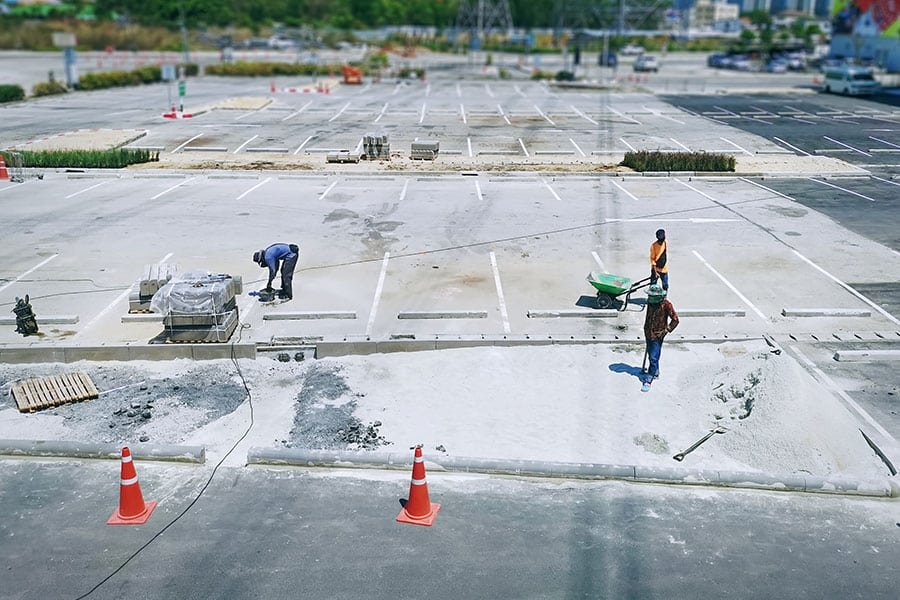
Customers judge a business by its parking lot before they ever reach the front door, and owners judge a contractor by what that pavement looks like five summers later. In Las Cruces the stress comes from relentless sun, short heavy storms and drivers who park wherever the shade is. A lot that is graded, drained and paved properly stays flat, clean and quiet. One that is not turns into ponds, potholes and trip hazards.
Parking lot construction covers everything from clearing and subgrade through base rock, paving, curbs, drainage, accessibility, striping, lighting conduit and landscape islands. We build new lots for retail, medical, office, school and multifamily sites, and we rebuild tired lots by patching, milling and overlaying, or replacing the full section when the base has failed.
Whether it is a few dozen stalls beside a clinic or a big field around a campus, we coordinate with the building contractor, the civil engineer and the utility companies so the lot gets finished correctly and in the right order.
Owners We Build Lots For
Retail chains care about opening dates, clear circulation, accessible routes and signage that matches the brand standard. A new store in a shopping center often shares parking with neighbors, so we coordinate with the center's owner on phasing, temporary stalls and cart-corral locations.
Campuses add scale and seasonality. New Mexico State University reported fall 2025 enrollment of 23,888 students, 16,076 of them on the Las Cruces campus, and the main campus occupies a core of 900 acres next to Interstate 25. On the NMSU campus and for other education institutions, we schedule lot work around semesters, move-in days and event weekends so the pavement is ready before the traffic comes back.
Medical sites need quick access for patients and ambulances. The MountainView medical district includes a 168-bed general hospital that opened in August 2002, and projects around hospitals and clinics call for clear emergency routes, generous accessible parking and minimal noise. Healthcare systems often ask for night or weekend work, and we plan staffing to match.
From Subgrade to Striping
A lot starts with evaluating the existing ground or pavement. For new construction we strip, proof-roll and correct soft areas, then place compacted base rock to the thickness the design requires. Asphalt goes down in lifts with attention to temperature and density, while concrete paving gets its own joint layout and finishing plan. After the pavement we place curbs and gutters, accessible ramps, wheel stops, bollards, light pole bases, signage and striping.
The details owners forget are the ones that cause the most trouble later. Accessible stalls need slopes that meet the requirements, drive aisles need turning radii for delivery and fire trucks, and sleeves and conduit have to be set before the paving, not cut in after. Drainage is the other big item. We confirm inlets, curb openings and swales with the engineer, then walk the lot after the first rain looking for birdbaths, because standing water is the quickest way to shorten a pavement's life. Our work with stormwater and drainage supports that effort.
Heat, Storms and Sun
Summer highs in Las Cruces average 96.2 degrees in June, and surface temperatures on dark pavement run well above that. Asphalt mix design, compaction timing and the choice of surface treatment all need to account for the heat, and we avoid heavy turning loads on fresh pavement in the middle of the afternoon. Spring brings wind and blowing dust, which complicates tack coats and joint cleaning, so we keep sweepers close.
Short, intense storms add the other half of the challenge. Water needs somewhere to go quickly, and a lot with even a slight low spot will hold it. We shoot grades at multiple stages, not just after paving, to catch problems when they can still be fixed. Shade structures, tree islands and landscaping also affect drainage patterns, so we coordinate them with the paving sequence.
Approvals and Accessibility
Parking lots are reviewed for zoning, landscaping, circulation, drainage and accessibility before they are built. The 2021 New Mexico Commercial Building Code adopts the 2021 International Building Code as amended and took effect July 14, 2023, and its accessibility provisions govern accessible stall counts, routes and ramps, so we check those items on the drawings before bidding. A stall layout that looks fine on paper can fail in the field if a cross slope runs just a little too steep.
Lighting is part of the permit picture. The 2020 New Mexico Electrical Code, adopting the 2020 National Electrical Code as amended, took effect March 28, 2023, and the pole bases, conduits and pull boxes we install have to match the electrician's layout. We keep inspection records and as-built drawings so the owner has what it needs for future maintenance and expansion.
Keeping the Business Open
Most lots serve a business that cannot close for a week. We phase the work in halves or quarters, keep entrances open, set up temporary striping and signage, and schedule noisy or disruptive steps for off-hours when the operation allows. Our approach to phased construction on occupied sites applies directly: communicate early, mark the safe paths clearly and keep pedestrians out of the work zone.
Concrete curbs and walks need cure time, asphalt needs to cool before heavy traffic, and striping crews need clean, dry pavement. When a new tenant is moving in, we coordinate with tenant improvement crews so deliveries and contractor trucks do not tear up new pavement. Retail owners often want work finished well before peak shopping weeks, and we build backward from those dates.
Get your lot on the schedule
Send us the site plan or just the address and we will look at the pavement, check how it drains and give you honest options, whether you need patching, an overlay or a full rebuild.
Questions Owners Ask
How long does a parking lot rebuild usually take?
A small lot can be finished in a couple of weeks, while a large one may take a month or more once you include testing, curing and striping. Phasing to keep the business open adds time but protects revenue. We give you a day-by-day sequence before we start.
Is a mill and overlay enough, or does my lot need full replacement?
That depends on whether the base is still sound. If the cracking is surface-level and the pavement drains well, an overlay can work. If the base is pumping, rutting or holding water, patching and overlaying only hides the problem. We core or probe the pavement before recommending either approach.
How do you handle accessible parking requirements?
We check stall counts, access aisles, slopes and route widths against the drawings and the adopted code, then verify them with a level during construction. Fixing a cross slope after paving means cutting out pavement, so we catch it early.
What can we do about standing water in our lot?
First find out why it is there: a low spot, a clogged inlet, a broken pipe or a design problem. Minor birdbaths can be fixed with patching or grinding, while major ones may need drainage work. We survey the lot after a rain to document it.
Can you work at night?
Yes. Hospitals, groceries and busy retail sites often prefer overnight paving and striping. We coordinate lighting, noise limits and security with the owner, and we plan the crew's schedule so the lot reopens on time.