
General Contracting Services
General Contracting
Las Cruces, NM
Las Cruces, NM
Stormwater and Drainage in Las Cruces and Dona Ana County
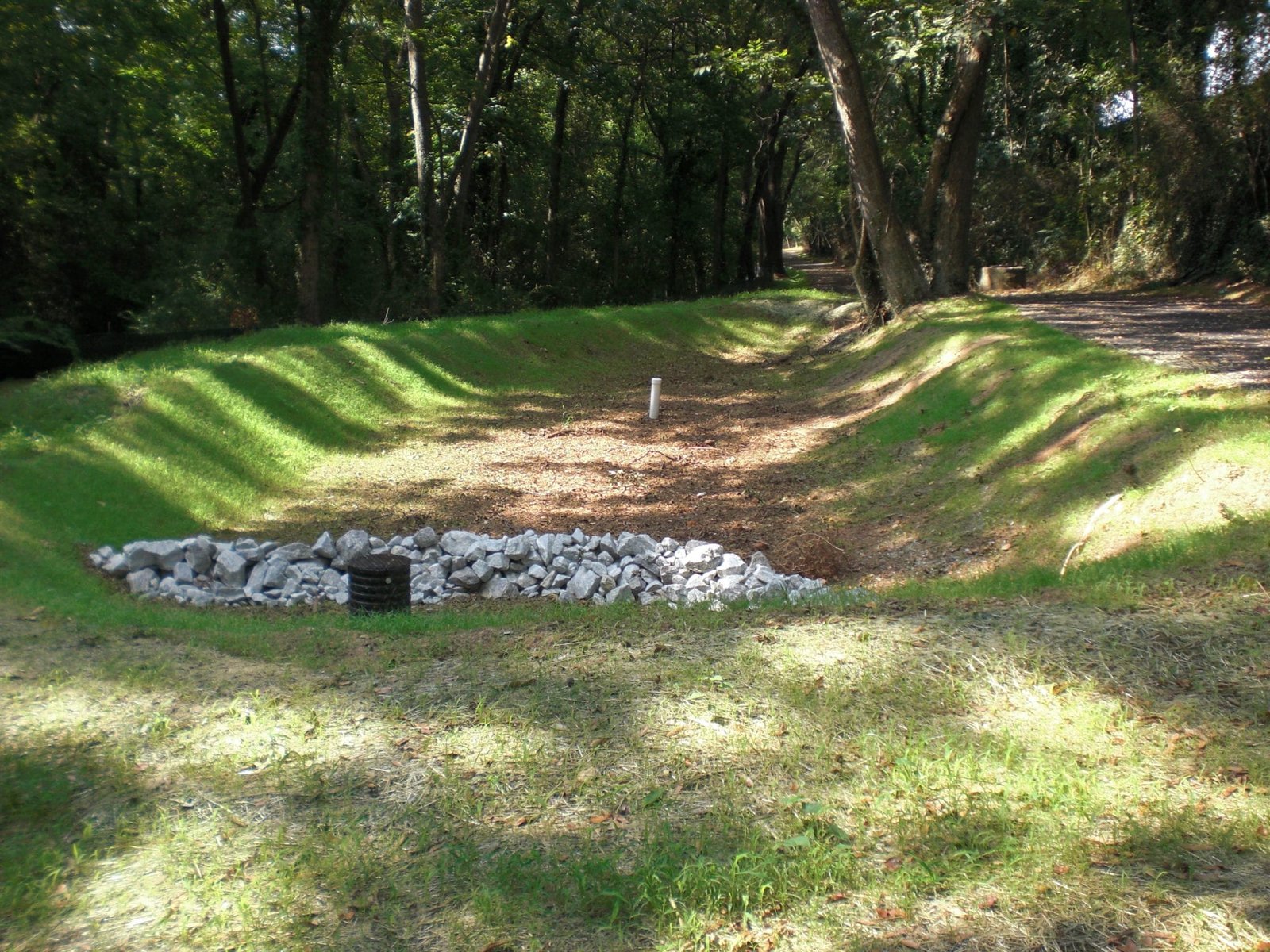
Nine inches of rain a year sounds like a drainage engineer's day off, until you watch a July thunderstorm unload on a fresh parking lot in Las Cruces. The city averages 9.14 inches of precipitation, and the arroyos around town are dry streams that often carry water after heavy thunderstorms. All of that rain tends to show up in a few violent hours, and a site with no plan for it ends up with a flooded dock door, a washed-out shoulder or a neighbor standing at your fence.
Stormwater and drainage work is everything that collects, carries, slows and releases runoff on a property: inlets, storm pipe, swales, channels, detention basins, outfalls, and the grading that points water toward all of it. We build these systems for commercial, industrial and institutional owners in the Mesilla Valley and across Dona Ana County, and we treat them as part of the core civil package instead of an afterthought buried in the paving bid.
Our job is to make the drawings work in the field. That means correct invert elevations, pipe bedding that holds up under truck loads, basins that actually drain, and erosion control that stays in place until the paving or vegetation is finished. We also help owners understand the design before it is built, which saves a lot of grief when the first big storm shows up.
Storm Flow, Ditches and Flat Ground
Water behaves differently across the metro. In Las Cruces the issue is fast, concentrated flow in arroyos and across pavement. Along the river it is canals and laterals: the diversion dam at Leasburg Dam State Park, completed in 1908, sends river water into canals serving Mesilla Valley farms, and any project near those ditches has to respect them. The park sits near Radium Springs, and the same irrigation network threads through a lot of the valley south of there. Out in Deming, the city article notes that minor flooding sometimes occurs over large areas of flat ground, which tells you how little fall some sites have to work with.
Flat ground means slow water, and slow water means careful math on pipe slopes and basin outlets. We check the design for minimum cover, outfall elevations and the high-water condition at the receiving channel, and we raise concerns early if the numbers leave no room for error. Where a site drains toward an irrigation facility, we sort out who is allowed to discharge there before any pipe is ordered.
Reviews, Permits and Code Context
Drainage plans are usually reviewed before a building permit is released, and the conversation tends to hinge on how much runoff leaves the site compared with how much left it before. The buildings themselves are designed under the 2021 New Mexico Commercial Building Code, which adopts the 2021 International Building Code as amended and took effect July 14, 2023. Roof drains and storm piping that tie into a building fall under the plumbing code, and the 2024 New Mexico Plumbing Code is listed as effective August 1, 2026, with permits issued under either the 2021 or 2024 edition until January 1, 2027.
Construction-phase requirements matter just as much: sediment controls, stabilized entrances, inlet protection and inspection logs. We line the drainage approval up with the building permit through permitting and entitlements so one does not hold up the other, and we keep the as-built information the reviewer will ask for when the job closes out.
What We Manage Closely
Pipe, structures and basins are the kind of work where field control makes the difference, so we supervise as much of it as possible directly: trenching and shoring, setting pipe on laser grade, forming and pouring inlets and headwalls, shaping basins and placing rock or other energy dissipation at outfalls. When a specialty like a pump station or a regional connection needs a specialist, we manage them tightly so grade and schedule stay under one roof.
Testing and documentation come with it. We check compaction in the trench zone, verify pipe slopes before backfill and keep a running record of actual inverts. Neighbors downstream and future buyers of the property will ask for that information someday, and having it ready makes the handoff easy.
Where Drainage Shapes the Building
A self-storage facility is mostly roof and pavement, so nearly every drop of rain becomes runoff and the basin often dictates the site layout. Retail is similar at a larger scale. The Mesilla Valley Mall area is a useful reminder: the center opened as a 602,150 square foot building on 77.4 acres with 4,500 parking spaces, and that much impervious surface in one place needs real conveyance and detention.
Industrial yards bring a different mindset. Trucks, containers and outdoor storage add sediment and oil concerns, so we coordinate sumps, berms and separators where the design calls for them. Manufacturers that wash down equipment or store materials outside also need to know where their water goes, and we help sort out which flows belong in the storm system and which do not.
The Pieces of a Drainage Package
A typical package includes clearing, rough grading of swales and basins, storm pipe and structures, curb and gutter, valley gutters, channels and culverts, outfall protection and final stabilization. We also handle trench drains at loading docks, underdrains where groundwater or irrigation seepage is a concern, and connections to existing city or county systems. Each piece has to meet the others at the right elevation, so we survey as we go rather than at the end.
Sequence matters. We build the basins first so they can act as sediment traps during construction, then the main lines, then laterals and structures, and finally restore and stabilize. Before turning the job over we clean out the basins, because a detention pond full of construction mud is not a detention pond. We coordinate that work with mass grading ahead of it and parking lot construction behind it so the whole site finishes as a system.
Let us look at your drainage plan
Bring us the civil sheets and the survey and we will go over the pipe, the basin and the outfall with you before bidding. A short conversation now tends to save a long one after the first storm.
Questions Owners Ask
Who decides how big the detention basin has to be?
The civil engineer sizes it from the storm design criteria and the reviewing agency's requirements, and the basin can take up a surprising share of the lot. We build to those drawings, but we weigh in during preconstruction when a basin can be reshaped or relocated to give you more usable pad or better truck circulation.
Can we tie into an existing storm system or irrigation ditch?
Sometimes, but not automatically. Connection rights belong to whoever owns the facility, and an irrigation district's permission is a separate conversation from the city's or county's. We help you find out early what is allowed so the design is not built on an assumption.
What do you do when a storm hits during construction?
We plan for it. Temporary swales, inlet protection, silt fence and a stabilized entrance are in place before the rain, and we inspect after every significant event. If something fails, we repair it and keep a record so the site stays compliant.
Does a flat Mesilla Valley site make drainage harder?
It makes it less forgiving. With little natural fall, pipe slopes, pond outlets and finished floor elevations need tight tolerances, and a small survey error can leave water standing. We check the high-water condition at the outfall before we commit to the numbers.