General Contracting Services
General Contracting
Las Cruces, NM
Las Cruces, NM
Education Facility Construction in Las Cruces
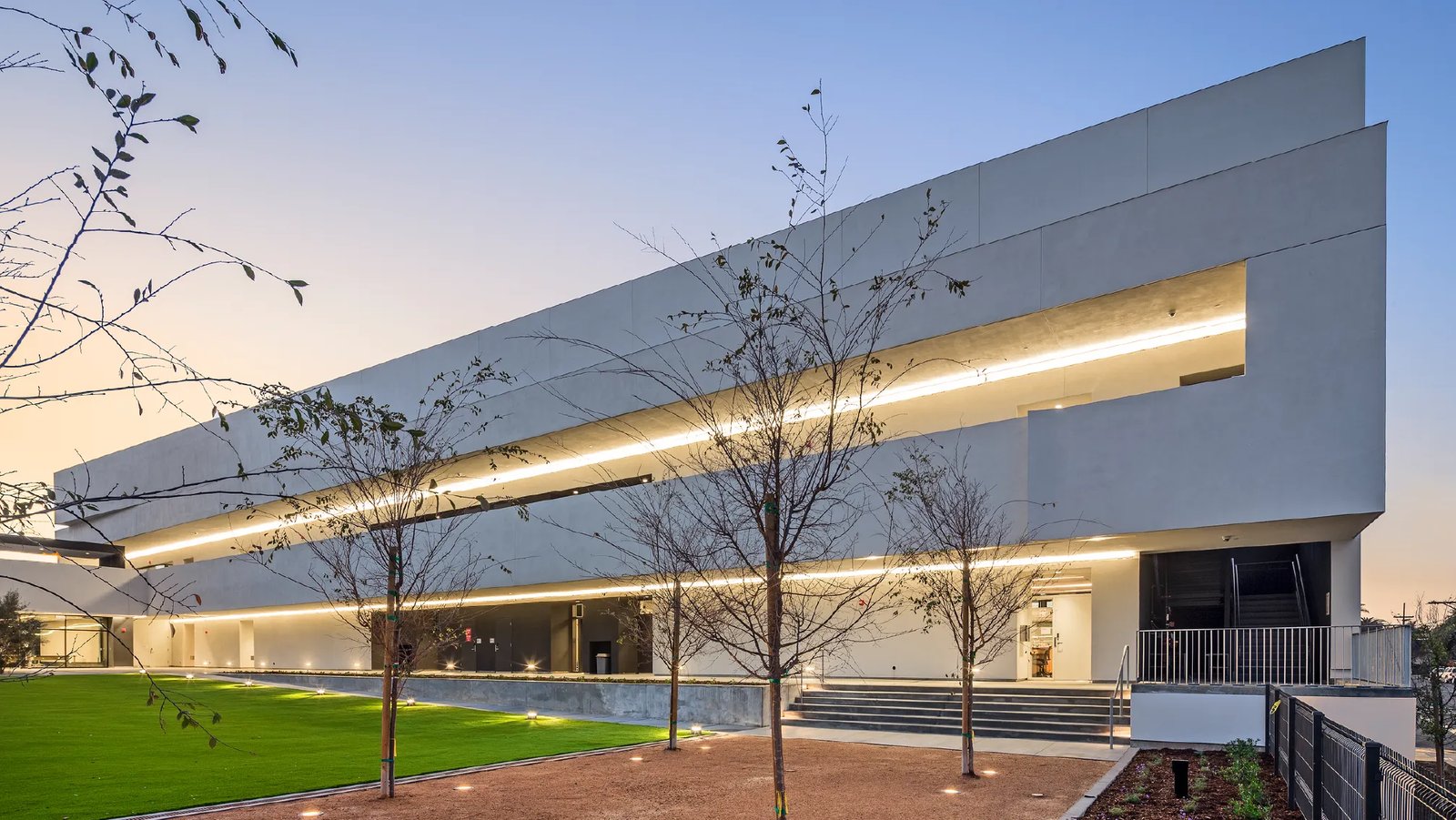
School construction runs on a calendar that the contractor does not control. Classes end in May and start again in August, and the whole job often has to fit in between. A roof replaced in July, a wing finished before the first bell, a lab ready for fall enrollment: these are the deadlines education owners live with, and we plan every project backward from them. The first question we ask a district or campus planner is not about the budget. It is about the date when students walk in.
Education is a major part of how Las Cruces works. New Mexico State University, Las Cruces Public Schools and the City sit at the top of the list of local employers, with Doña Ana Community College also on it. Fall 2025 enrollment at NMSU was 23,888, with 16,076 on the Las Cruces campus. The main campus occupies a core of 900 acres next to Interstate 25 and bordered by Interstate 10, and the university reports about $150 million per year in externally funded research programs. Those numbers mean a steady stream of classroom, laboratory and support construction.
We build for public school districts, community colleges and the university, and for private operators who run charter or specialty schools. Each of them buys differently, and part of our job is to explain the options in plain terms.
Campuses, Districts and the Arrowhead Corridor
The south end of NMSU's campus is a good place to see how education construction is changing. Arrowhead Park, which covers land between Interstates 10 and 25 with direct visual exposure to both, lists build-to-suit capability and several projects: a Doña Ana Community College Creative Media Technology Building, a Film Street Construction project and a planned Film and TV Soundstage Complex for which design-build proposals were due April 18, 2025. That mix of college, creative industry and private partners is a different kind of education project than a typical classroom wing. The Arrowhead Park area is where we expect more of it.
Outside Las Cruces, the Gadsden Independent School District serves Anthony, Chaparral, Vado and the rest of the southern county, and Hatch Valley Public Schools serves Salem and Garfield. A growing community like Chaparral, with 16,551 residents at the 2020 census, needs the kind of steady school and support building that growing districts have to deliver. Our Anthony page covers the south valley in more detail.
Building Between the Last Day and the First Day of School
The most common education schedule has a hard start date and a hard end date. We plan for it by releasing long-lead items early, scheduling subcontractors months in advance and building a three-week lookahead that the district and the principal both see. A renovation in a school building typically takes place during the summer, so we get the roofing, flooring, mechanical and electrical work lined up in the order that finishes the building envelope first and the interiors last.
Summer is also the hottest time of the year in the Mesilla Valley, with June highs that average 96.2 degrees Fahrenheit. We shift outdoor concrete and roofing to early hours, protect crews with water, shade and rest breaks, and cool the building as soon as the temporary power is in. A missed pour on a hot day can cost more than a day.
Work Near Children and Students
Construction on or beside an occupied campus requires a separate set of safety rules. We fence the site, keep deliveries away from drop-off and pickup times, assign a person to control the gate and brief all workers on the rules for working near students. Background checks and badge requirements vary by owner, and we meet each one before a worker steps on the property. Noisy work is scheduled around testing weeks, and dust and fumes are controlled so classrooms next door stay usable.
University campuses add a different challenge: lots of pedestrians, bike traffic and events. We coordinate with campus police and facilities staff on closures, route trucks through approved gates and keep temporary walkways clear and well lit.
How We Help Public Owners Choose a Delivery Method
Public owners often have rules about how they must buy construction, including sealed bids, requests for proposals and cooperative contracts. We explain the practical difference between delivery methods without taking sides. A hard-bid job is simple and competitive but gives the owner less say over the builder. A construction manager at risk approach brings the builder in during design and sets a guaranteed price when the drawings are ready. Design-build, like the soundstage proposal mentioned above, puts design and construction in one contract.
When a district asks which is best, we answer with the project: how much is known, how tight the date is and how much the owner wants to steer the design. Then we help the owner assemble documents that match the method they choose.
Related Public and Housing Work
Campuses are more than classrooms. Housing is often part of the same master plan, which is the focus of our student housing construction work. Many districts and colleges also manage city- and county-level buildings, and our municipal and government construction experience applies to those. Education owners, including education institutions of every size, can read about our school building approach for more detail on classrooms, gyms and cafeterias.
Plan a School Project With Us
Tell us the campus, the scope and the date students need to be back in the building. We will help you pick a delivery method and sketch a schedule that fits.
Questions Owners Ask
Can you finish a renovation between May and August?
Often, if the work is scoped realistically and long-lead items are ordered in the winter. We lay out a schedule with float for monsoon weather and inspection timing, and we tell you early if a scope looks too large for one summer. Phasing across two summers is sometimes the better answer.
What does the construction manager at risk method change?
It brings us in during design, so we can check cost and constructability as the drawings develop. When the design is ready, we propose a guaranteed maximum price. The owner keeps a design team independent from the builder and gets earlier pricing than hard-bid.
How do you protect students during construction?
With physical separation, controlled access and a plan the school approves. Fences, covered walkways, separate truck routes, flaggers and strict hours are all standard. We also review the plan with the principal and the district before mobilizing, and we adjust it when the school day changes.
What about the research labs and specialty spaces at a university?
Labs call for ventilation, specialty plumbing, power quality and often vibration control. We ask for equipment lists early, plan ceiling space carefully and test each system before handing over. With NMSU reporting about $150 million per year in externally funded research, we expect lab projects to remain a consistent part of the work.
Do you build for private and charter schools?
Yes. Private owners often move faster than public ones and may have a smaller budget, so we focus on a simple, durable building. We can help convert an existing commercial space into classrooms, which is a common route.