General Contracting Services
General Contracting
Las Cruces, NM
Las Cruces, NM
Construction Manager at Risk in Las Cruces
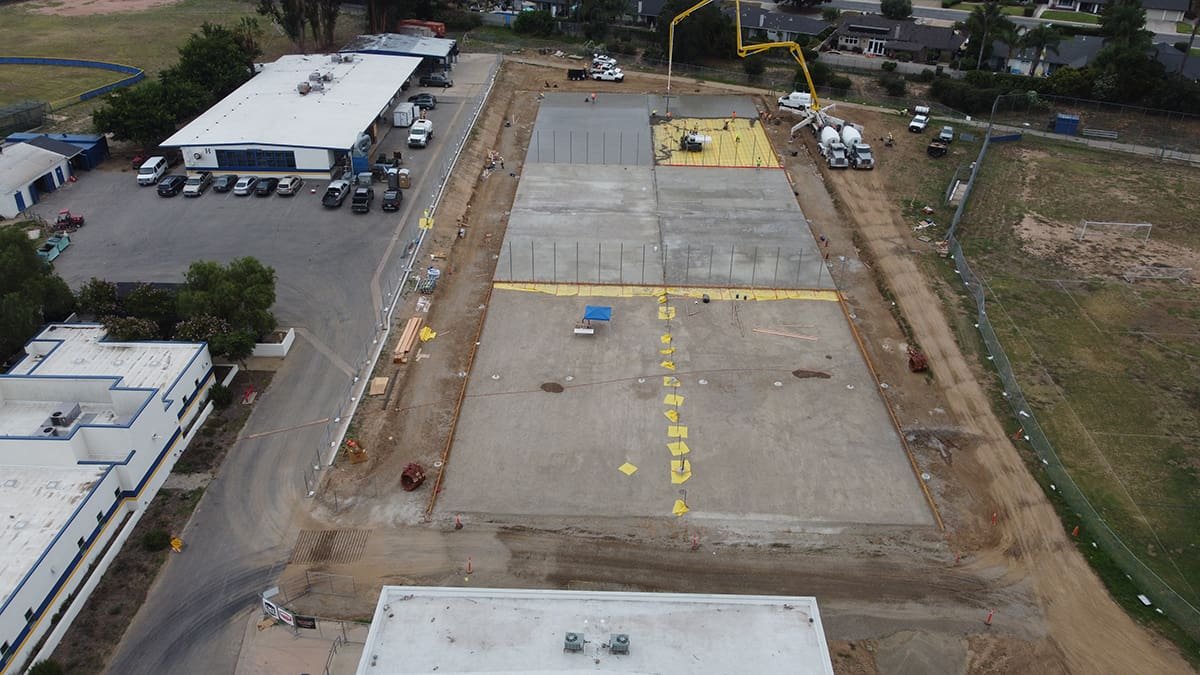
The largest employers in Las Cruces include a state university, a public school district, a city, a county, a community college and two hospitals, and all of them build, renovate or expand from time to time. Those owners tend to share a problem: the work happens in occupied places, with public accountability, on a budget that was set before the drawings were done. Construction management at risk was invented for that problem.
As a construction manager at risk, we join the project early, during design, and stay through closeout. We advise on cost and schedule while the drawings are being made, then commit to a guaranteed maximum price for the work. The owner keeps the architect and the design, and we take the risk of delivering the building for the agreed number. Nothing is hidden, because the buyout of every trade is open to the owner.
Owners in the healthcare and education fields use this method often, and so do cities and counties that want a transparent record of where the money goes.
Hospitals, campuses and schools in one metro
Memorial Medical Center, a 286-bed hospital with a 1971 building on South Telshor Boulevard, and the 168-bed MountainView Regional Medical Center, which opened in August 2002, form the core of a medical community that also includes a 125-bed psychiatric hospital and a 46-bed regional hospital that opened in 2020. Hospitals like these never close, so every renovation is a phased project with infection control, utility shutdowns and patient access to protect. The MountainView medical district is a good example of a place where continuity matters more than speed.
New Mexico State University reported fall 2025 enrollment of 23,888 across its system, including 16,076 on the Las Cruces campus. A campus of that size has classrooms, labs, housing and athletic facilities all in use, and construction has to find a way around the academic calendar. We plan projects in phases that fit those cycles and communicate with the facility managers who see the site every day.
The phases of a CM at risk project
The first phase is preconstruction. We review the design at each stage, price it, and report where the cost is trending against the budget. Our preconstruction estimating work is the foundation here, and the owner sees line-by-line detail. We also suggest early work packages, such as site preparation or long-lead equipment, that can start before the full drawings are finished.
The second phase is the guaranteed maximum price, set when the drawings are far enough along to price with confidence. After that comes buyout, where we solicit bids from subcontractors in an open process and report results to the owner. Savings from buyout can return to the owner or be shared, as the contract states. Construction follows, and the owner receives monthly reports on cost, schedule and changes.
Contingency, allowances and who owns the savings
A guaranteed maximum price contains contingency, and the contract should say who controls it. We carry a construction contingency for unforeseen conditions and show how much is used and why. Owners also hold their own contingency for scope changes. Keeping the two separate makes the monthly reports easy to read and avoids arguments.
Allowances for items not yet designed, such as finishes or equipment, need care. We write each allowance with a clear scope and track it to completion, so an owner knows when an item is on budget and when it is not. The point is that the final cost is explained at every stage, and nothing arrives as a surprise at the end.
Working inside occupied buildings
Occupied sites require a plan that treats the building's users as part of the project. Dust barriers, negative pressure, noise windows, temporary egress routes and utility outage notices all appear in the work plan, and we review them with the facility team before work begins. Our approach to phased construction in occupied sites covers the details, and the construction manager is the party who writes them into the schedule.
Safety is a daily routine. We hold orientation for every worker, control the gate, check infection-control barriers in healthcare areas and keep tools and materials away from public paths. Schools add another layer: background checks, fenced zones and work outside class hours. We plan for those from the first day.
Early packages and a faster path to opening
CM at risk can shorten the schedule because it allows bidding and construction in stages. Site work, foundations and structure can start while mechanical and interior drawings are completed, and equipment with long lead times can be ordered once the design is settled. We lay out those early packages in a master schedule so the owner sees the earliest dates.
The last phase is commissioning and closeout. Healthcare and education buildings in particular need systems tested and documented before occupancy, and we schedule that work, as covered in our commissioning and closeout process, to finish with time to spare. We also hand the owner a complete set of manuals, warranties and as-built records.
Rules that shape a public project
Public owners follow procurement rules that are set by law and by their own governing bodies, and we read those rules before we propose a structure. In practice that affects how subcontractors are selected, how bids are opened and how contracts are awarded. We follow the owner's process and document each step so the record stands up to review. Owners in the public sector can expect that level of care.
The project is permitted under New Mexico's 2021 Commercial Building Code (14.7.2 NMAC). Hospital projects add health-facility requirements that the owner's design team will identify. We coordinate with them and keep the permit and inspection schedule current.
Planning a public or institutional project?
Bring us in during design and we will help you see the cost before it is set in the drawings. Call us to talk through the process.
Questions Owners Ask
How is CM at risk different from design-build?
With CM at risk, the owner hires the architect separately and the builder joins as an adviser, then commits to a price. With design-build delivery, one team carries both design and construction. The first gives the owner more control of the design, and the second can be faster.
What does the guaranteed maximum price guarantee?
That the work described in the contract will cost no more than the agreed amount, excluding owner-directed changes. Savings are handled as the contract states. We show every number behind the guarantee.
When should the construction manager be hired?
As early as the owner can, ideally during schematic design. The earlier we join, the more effect our cost and constructability advice has. A late hire loses most of the benefit.
Can small local subcontractors bid?
Yes. We prepare bid packages in sizes that local trades can handle and hold outreach meetings before bids are due. Public owners often care about this, and so do we.