General Contracting Services
General Contracting
Las Cruces, NM
Las Cruces, NM
Mass Grading in Las Cruces and Dona Ana County
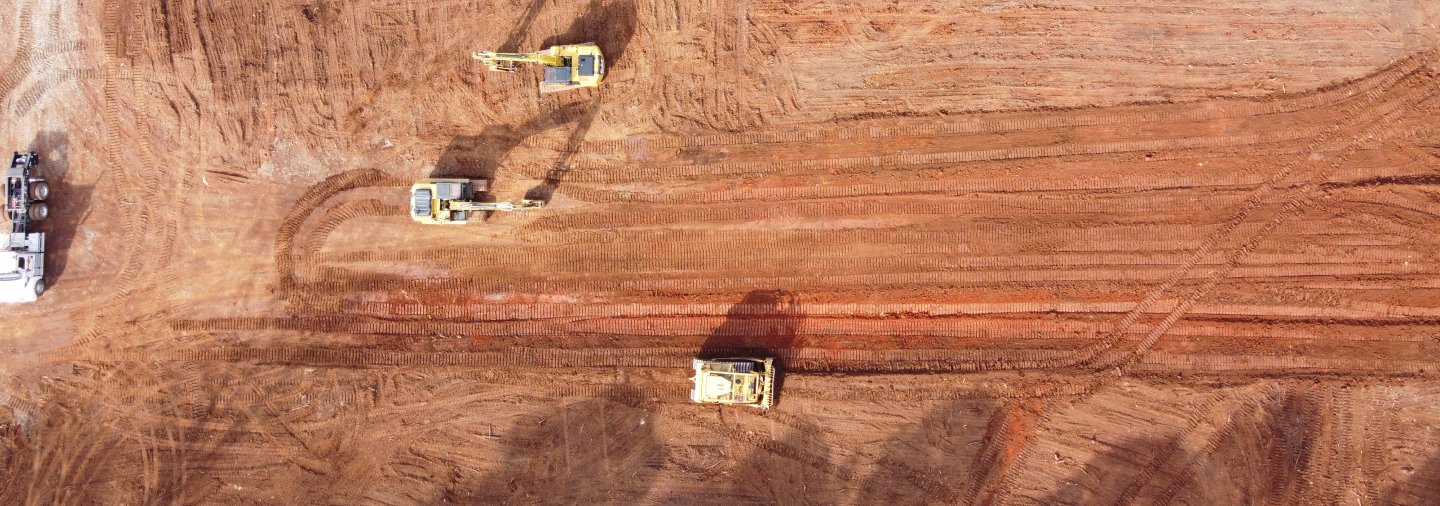
Most grading plans around Las Cruces look easy on paper: a flat pad, a gentle fall toward the street, and a haul-off number nobody quite believes until the scrapers start turning. Then spring arrives, the afternoons turn windy, and the dust you are making becomes the neighbor's problem and the inspector's problem too. We build the earthwork schedule around that reality from day one instead of finding out about it in April.
Mass grading is the bulk movement of soil that turns raw ground into a site you can build on. It covers stripping topsoil, cutting the high spots, filling the low ones, compacting in lifts, and shaping the subgrade so the building pad, the truck court and the drainage system all land where the civil drawings say they should. Out at Santa Teresa or near the I-10 and I-25 junction, that can mean a lot of acreage moved before the first footing is dug, and the way it is sequenced decides whether the concrete crew starts on time.
We coordinate the whole earthwork picture for owners and developers in the Mesilla Valley and across Dona Ana County: survey control, geotechnical recommendations, testing, haul routes, dust control and the handoff to utilities and foundations. The goal is simple. You get a pad that passes compaction testing the first time and a site that drains the way the engineer drew it.
Why Grading Is Different Here
Las Cruces sits at about 3,908 feet, and the Rio Grande runs west of town through the Mesilla Valley. Between the valley floor, the mesas and the foothills, a single development can contain very different ground, and the city averages only 9.14 inches of rain a year. Dry soil feels forgiving until a summer storm turns an arroyo into a river, and the surrounding arroyos are described as dry streams that often carry water after heavy thunderstorms. A grading plan that ignores where that water wants to go will be redrawn by the first monsoon.
Industrial demand is also pulling large sites out of open desert. The City of Las Cruces Innovation and Industrial Park sits at the I-10 and I-25 interchange and lists more than 400 acres shovel ready, which is the kind of ground where cut and fill are measured in acres rather than lots. We have a feel for what these big, flat, exposed parcels ask of an earthwork crew: wind, heat, long haul distances inside the site, and tight coordination with whoever is setting the utilities.
How We Run an Earthwork Job
We start with the geotechnical report and a walk of the site with the grading plan in hand. Before anybody mobilizes, we want to know what the borings say about the soil, how deep the topsoil is, where the cut will come from and whether it is good enough to reuse as structural fill. If the numbers do not balance, we say so early and talk through options: import, export, raise the pad, or re-grade the parcel so the site holds its own material.
On the ground, we set survey control and stakes ahead of the equipment, strip and stockpile topsoil, and work the pad in compacted lifts with density testing as we go. Moisture conditioning matters a great deal here, because the desert wants to pull water out of fill faster than most people expect. We keep a water truck on the job and treat it as a production tool, not just a dust-control chore. Haul roads, stabilized construction entrances and sediment controls are laid out before the first cut so the site stays clean and stays compliant.
Wind, Heat and the Calendar
Summer highs in Las Cruces average 96.2 degrees in June, and spring afternoons can be windy with blowing dust. That means early starts in the hottest months, water on the haul roads, and a schedule that does not pretend every working day is equal. We plan equipment hours, fuel and water supply around the weather rather than around a generic calendar, and we pause when wind makes work unsafe or makes dust impossible to control.
Nearby farms and irrigation ditches add another layer. Canals and laterals carry river water to Mesilla Valley fields, so grading near an irrigation district's facilities calls for early conversations, protected crossings and clear marking of anything that must stay in service. We bring that coordination to the table at preconstruction, alongside the work in stormwater and drainage, so the pad, the ponds and the neighboring ditch all agree with each other.
Sequencing Grading With Everything After It
Grading is the first domino. Utilities cannot trench until the subgrade is rough-cut, foundations cannot be laid out until the pad is certified, and concrete foundations cannot start until the testing lab signs off. We lay out the earthwork phases so the first building pad is finished and released while the crews keep shaping the rest of the site, which gets vertical work started weeks sooner on a large project.
If you are developing a speculative warehouse building or a distribution facility, we also plan for the truck courts and paving that follow, working with parking lot construction and logistics-minded owners in logistics and distribution to leave the subgrade in the right condition for heavy loads. A pad built for a forklift yard is not the same as a pad built for an office lawn, and we grade each one with its final use in mind.
What Moves the Price
The biggest swing in an earthwork budget is whether the site balances. Every cubic yard that has to leave or arrive adds trucking, and trucking in a desert corridor gets expensive fast. After that come the unsuitable-soil allowances, the amount of water and moisture conditioning the fill needs, the length of the haul inside the site, and the compaction testing frequency the engineer requires.
We price those drivers openly and keep unit rates visible so you can see where the money goes. Rock or hardpan found during excavation, an extra foot of over-excavation under a heavy slab, or a late revision to the pad elevation are the usual surprises, and we like to talk about them at the start rather than in a change order later. For developers working near the interstates, the clearest savings usually come from a grading plan that has been tuned to the soil rather than stamped onto it.
Talk through your site
Send us the survey, the geotechnical report and the grading plan, and we will walk the property with you, flag where the cut and fill will not balance and give you a straight number. No pressure, just a neighbor who has seen this ground before.
Questions Owners Ask
How long does mass grading take on a large Las Cruces area site?
It depends on acreage, how well the cut and fill balance, and whether you can finish pad by pad. Many projects release the first building pad within a few weeks of mobilizing while the crew keeps working the remainder. Weather, utility conflicts and testing turnaround are what stretch the timeline, so we build slack for them into the schedule.
Do we really need a geotechnical report before grading?
Yes. The report tells us what the soil will do under fill, how much needs to be removed, and what the compaction and moisture requirements are. Grading without it is a gamble that tends to show up later as settlement under a slab or a failed density test.
How do you keep dust under control?
We use water trucks as a standing part of the job, limit disturbed area to what is being worked, stabilize haul roads and watch the forecast. Spring winds can make dust control impossible on certain days, and when that happens we shift to work that does not generate it.
Can you grade a site that crosses or abuts an irrigation ditch?
Often, but it takes early coordination. We locate and mark the facility, protect crossings, and talk with the district before any equipment gets close. Keeping the ditch in service while the work is going on is usually part of the agreement.
What happens if we hit rock or unsuitable soil mid-job?
We stop, document it and bring you the options with numbers attached: over-excavate and replace, redesign the pad, or reuse material with treatment. Having a contingency line for unsuitable soil from the beginning keeps surprises from becoming disputes.