General Contracting Services
General Contracting
Las Cruces, NM
Las Cruces, NM
Structural Steel Erection in Las Cruces and Dona Ana County
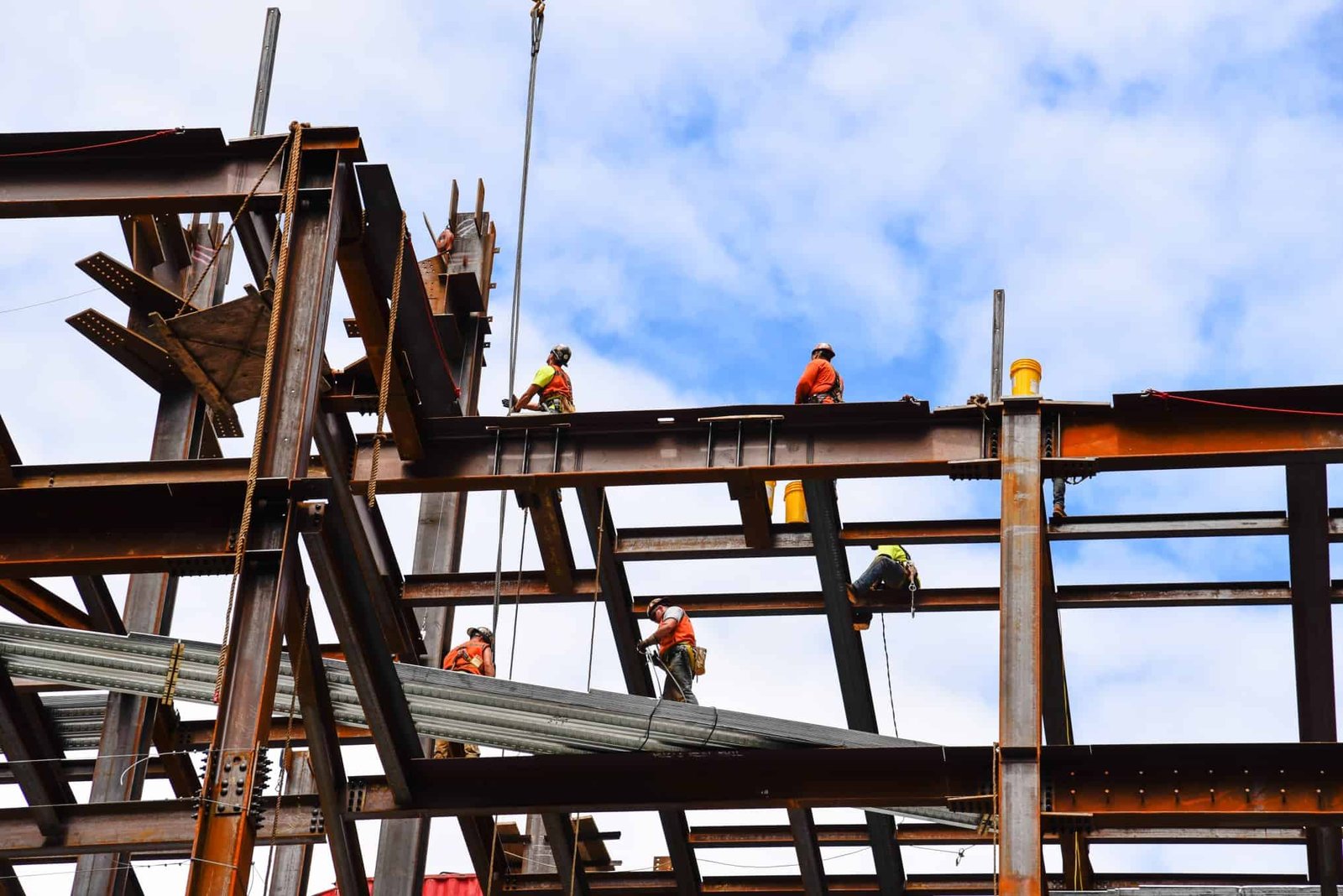
Spring afternoons in Las Cruces can be windy with blowing dust, and a crane hoisting a 40-foot beam cares about that more than it cares about the schedule. Steel erection is one of the few trades where the weather can stop the whole job in the middle of a workday, and it is also the trade that sets the pace for every trade that follows. Anybody who has watched a steel crew wait out a gust knows why we build wind into the plan from the first meeting.
We erect structural steel for commercial, institutional and industrial buildings across the Mesilla Valley: moment frames, braced frames, mezzanines, canopies, equipment platforms and the framing around heavy openings. Some of that steel is the whole structure of a building. Some of it is the skeleton inside a masonry or panel exterior. Either way, the work begins with drawings and ends with a surveyed, plumb, fully bolted or welded frame ready for the deck.
This page explains how we sequence the work, what shapes the schedule in this part of New Mexico, and what to ask any erector before you sign.
Wind limits, fall protection and a clean pick plan
Every pick starts with a plan that names the crane, the radius, the rigging and the weight of the piece. For long beams, trusses and joist girders, we use spreader bars or multiple hitches to keep the load stable, and we hold the lift whenever gusts exceed the crane manufacturer's limits or the rigger's judgment. Blowing dust matters too, because it cuts visibility for the signal person and the operator.
Steel workers connect at height, so fall protection and decking safety are part of the erection plan, not an add-on. Safety nets, controlled decking zones and tie-off points are laid out before the first column goes up. We hold a pre-erection meeting with the owner's representative, the crane operator and the inspector so everyone knows the lift sequence and the exclusion zones around the pad.
Lead times, laydown and the order of the frame
Fabrication is the longest wait. Detailing, shop drawing approval, mill material and shop fabrication usually take weeks before the first truck leaves, and the erection schedule has to start with the fabricator's delivery sequence, not the other way around. We review shop drawings against the structural, architectural and mechanical sets, then confirm that the first pieces to ship are the ones the crew needs first. Laydown space is a quiet constraint: a tight site near downtown or an occupied campus may allow only a few trucks at a time.
Erection order follows stability. Columns go up, beams tie them together, bracing goes in, and the frame is plumbed and checked before the deck and bolts are finished. In summer, we start the crew early to avoid the hottest hours, and we survey in the morning because hot steel expands through the day. Deck and joist installation follow quickly so the next trade can work under a roof or at least a protected floor.
What the steel package includes
The package begins at the base plates. Anchor rods set in the footings must land within tolerance, so we survey them before steel arrives and correct any that are off. Columns are set on leveling nuts or shims and grouted once the frame is plumb. Beams, girders, joists and bracing follow, then metal deck, shear studs, edge angles and the miscellaneous steel that tends to be forgotten, such as stair supports, ladders and handrails.
On the field side, welding and bolting are inspected by a third-party special inspector under the structural engineer's plan. We schedule inspections in advance, keep a log of bolt tension and weld checks, and fix deficiencies before the next trade covers them. The coordination with foundation work starts early, because a late anchor rod fix is slow and expensive.
What moves the steel price
Steel price, fabrication complexity, crane time and the number of pieces all matter. A building with many small, varied members costs more to detail and erect than one with repeated beams and columns. Connections that need field welding cost more than bolted ones, and heavy transfer girders or long cantilevers add crane time and rigging.
Crane access is another driver. A site where the crane can sit in one position and pick the whole frame costs less than a site with a tight perimeter that forces repeated moves. The airport area's growing hangar and aviation development, which includes extended utilities, lighting and taxiways on the east side to support new hangars, shows how the same steel principles apply to buildings with very different footprints. Our work on aircraft hangars and airport-side sites starts with the door opening and works back to the frame.
Keeping erection and site work in one hand
We would rather have one team responsible for the steel from base plate to roof deck than hand off between crews. That keeps the survey, the plumb checks and the connections consistent, and it keeps accountability clear. When a column is a quarter inch out, we want the same erection crew that set it to correct it.
We pair erection with our pre-engineered building work and our crane building experience, so an owner who needs a mixed structure, such as a PEMB with a heavy interior mezzanine, deals with one erector. Public buyers in the education sector appreciate the single point of contact, especially on campus sites with tight access.
Need a steel crew in the Valley?
Send us the drawings or the design intent and we will walk through the pick plan and schedule with you. We would be glad to talk it over.
Questions Owners Ask
How long does fabrication take before steel arrives?
It depends on the mill, the fabricator's backlog and the complexity of the frame. Detailing and shop drawing approval often take longer than owners expect. We ask the fabricator for a written ship schedule at buyout and track it weekly, because a late first delivery pushes everything behind it.
Should steel be bolted or welded in the field?
Bolting is faster and easier to inspect, and welding is sometimes required for moment connections or tight geometry. The structural engineer sets the connection type, and we point out when a small change would save field time without hurting performance.
What happens when it is too windy to lift?
We stop. The crane's rating and the rigger's judgment set the limit, not the schedule. We use the early morning when winds are lighter, and we build a day or two of weather float into longer erection windows.
Who checks the anchor rods before the steel shows up?
We do, with a survey of every base plate location. Rods that are out of position are corrected with the engineer's approved method before columns are set. Finding the problem on the ground costs a fraction of finding it with a crane waiting.