Service Areas
General Contracting
Las Cruces, NM
Las Cruces, NM
Hangar and Airside Construction at Las Cruces International Airport
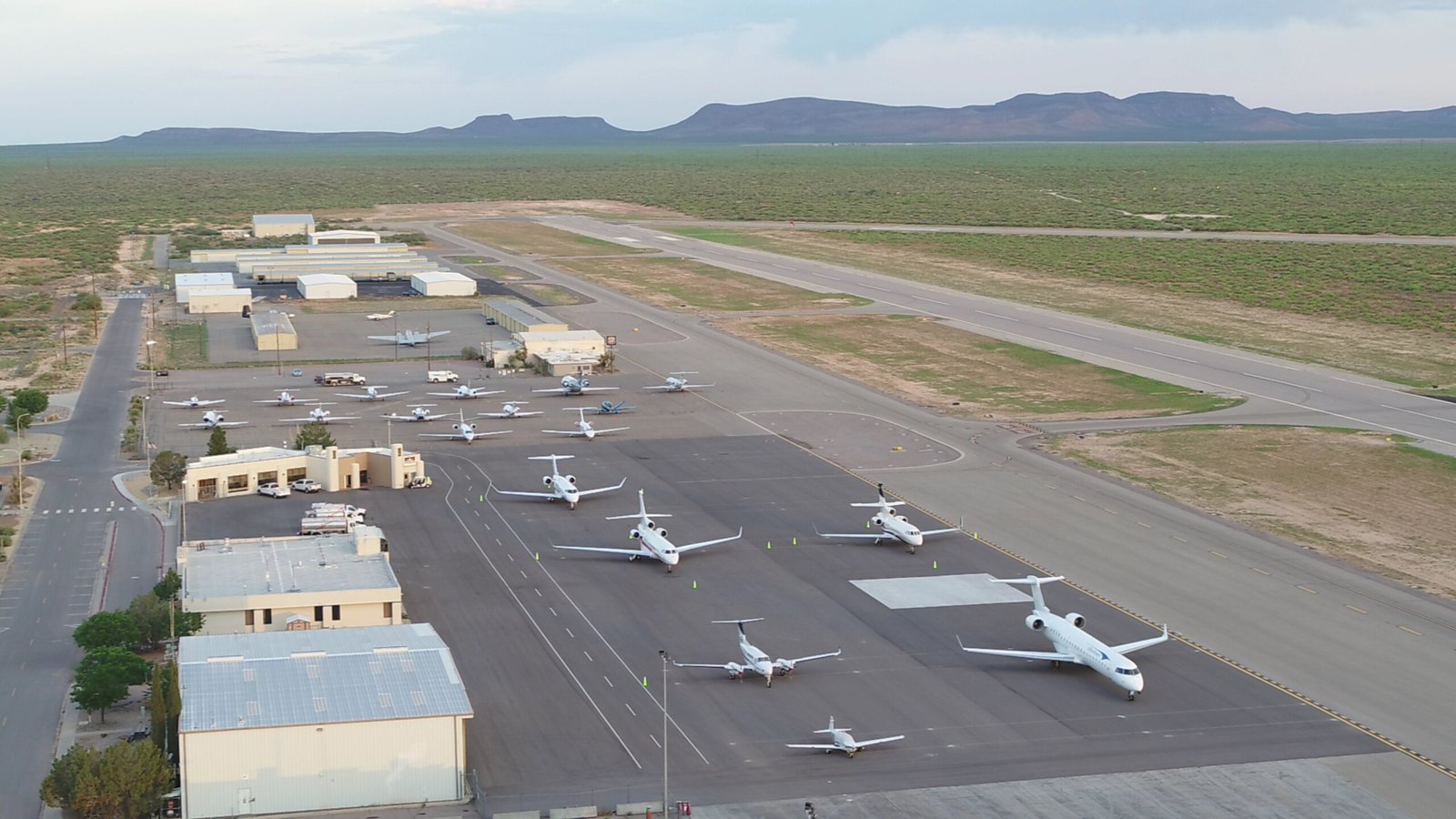
Nine miles west of downtown, a city-owned airfield with three runways is adding aerospace to its master plan, and that changes what gets built beside it. Las Cruces International Airport has runways of 7,501, 6,069 and 7,506 feet, an elevation of 4,457 feet and a mix of university flight activity, a National Guard aviation company and private operators. For owners who need hangars, aprons, shops or an office near the ramp, we build the structures and the paved surfaces that make them work.
Hangar construction is a specialty of its own. Clear spans, tall door openings, fire protection, floor slabs that carry aircraft loads and apron concrete that meets the taxilane at the right grade all need careful coordination. We design and build around the aircraft you plan to house, not a generic footprint, and we sequence the work so airport operations are not interrupted. Our aircraft hangar experience is the starting point for every project here.
The airport also sits next to an industrial park, which opens the door for aerospace suppliers, maintenance operators and flex users who want runway access. Whether you are a single-hangar tenant, a fixed-base operator expanding services or a manufacturer looking at the adjacent land, we help you compare options and put a number on each one before you sign a ground lease.
Hangars, Aprons and the Buildings Beside Them
A typical project begins with a hangar, either a box hangar for a single aircraft or a larger clear-span building for a fleet or a maintenance operation. A March 2021 report counted 40 box hangars and about a dozen T-hangars at the field, and noted that utilities, lighting and taxiways were being extended on the east side to support more hangar development. That tells us the demand pattern: more individual owners and more infrastructure ready for them.
We build the hangar and everything around it. Foundations and slabs, steel framing, insulated panels, door systems, electrical service and fire protection are part of the package, together with the apron and approach paving that connect to taxiways. When an owner wants office space, a classroom for flight training or a shop, we integrate it into the same building and design it so the hangar floor stays clear. See our clear-span rigid frame buildings approach for the structural options.
Airport Rules and Building Codes Together
Building at an airport means two sets of rules. The airport owner, which here is the city, controls leases, site approvals, height limits and access, and the state building code governs the structure itself. New Mexico's 2021 Commercial Building Code, which adopts the 2021 International Building Code as amended, took effect July 14, 2023, and the 2021 Commercial Energy Conservation Code took effect January 30, 2024. We confirm both the airport's requirements and the code path before design is final.
Airfield projects also face federal review for anything that might affect air navigation, such as tall equipment or cranes. We build that review into the schedule, and we plan crane placement and haul routes so the work never infringes on protected surfaces. The airport's master plan update, which adds aerospace as a focus and describes phased improvements, is one more document we read before laying out a site.
Working Next to Active Runways
Airside safety comes first on every job. Contractors must stay out of runway and taxiway safety areas, control foreign object debris, keep vehicles and equipment marked and follow the airport's escort and access procedures. The field completed five miles of eight-foot perimeter fence in October 2020, which means gates and credentialing are part of the routine, and every crew on our sites is briefed before setting foot on the property.
We also plan around flight schedules. University training flights, helicopter operations and general aviation traffic all use the field, so we coordinate work hours, crane use and lane closures with the airport manager. Daily briefings, spotters at crossings and clear radio or phone contacts keep everyone aware of what is happening on the ramp.
Aerospace, Training and Industrial Land Together
Several uses overlap at this field. New Mexico State University flight activity and an Army National Guard aviation company operating four UH-72 Lakota helicopters share the airport with two fixed-base operators, and a November 2021 report says the master plan update adds aerospace as a new focus, with the city hoping to extend two runways to 8,600 and 10,500 feet. Those are plans, not commitments, but they signal where the airport expects to grow.
The City of Las Cruces Innovation and Industrial Park sits at the junction of I-10 and I-25 next to the airport, with more than 400 acres shovel ready and Foreign Trade Zone 197 coverage. Exit 132 on Interstate 10 serves Las Cruces and the airport, so trucks, visitors and employees all have simple access. For a developer, that combination of runway, interstate and ready land is unusual in the region. See how our commercial real estate developer clients approach sites like this.
Keeping Hangar Projects on Pace
A well-planned hangar job runs about as long as the long-lead items allow. Door systems and building packages are the slowest items, so we order them first. While they are in production we complete the earthwork, utilities and foundations, so that the building arrives to a ready pad. Concrete aprons are poured in segments, with joints laid out to match the taxilane geometry and cure times respected before aircraft move across them.
We also coordinate with the airport's own projects, which can include taxiway work or utility extensions, so that crews and equipment are not competing for the same ground. If you need to move aircraft into the new hangar by a certain date, we build a schedule backward from it and tell you which decisions on your side must be made by when.
Where a Hangar Project Leads
Many hangar owners become developers of a small campus: a second hangar, a maintenance shop, a flight school or an office building. Our flex and light industrial construction covers the shop and office pieces, and Dona Ana County International Jetport offers a different setting for owners who want a county-owned field near Santa Teresa.
We also work with owners who plan to build on the adjacent industrial land. Arrowhead Park near the university and the I-10 and I-25 interchange area are two nearby sites that may suit users who need highway exposure more than runway access.
Talk With Us Before You Sign the Lease
Tell us the aircraft, the use and the schedule. We will review the parcel with you, sketch the hangar and apron, and deliver a budget that reflects airside conditions.
Questions Owners Ask
Can you build a hangar if I only have a ground lease?
Yes. A ground lease is common at airports, and we can build the hangar under it. We review the lease terms for height limits, setbacks, design standards and reversion clauses, and we coordinate with the airport owner before submitting plans.
How long does a hangar take from contract to move-in?
The pacing item is usually the building package and the door system, so the earlier you commit, the sooner you move in. We schedule site work and foundations while the package is being manufactured, and we tell you the critical dates at the start.
Do you build aprons and paving as well as hangars?
Yes. We place the aircraft-rated concrete or asphalt, the joints and the drainage that connects to the taxilane. Pavement thickness depends on the aircraft you will park, so we design it with your engineer and the airport.
How do you handle construction near active runways?
We work from an airfield safety plan that covers access, escorts, equipment marking, foreign object debris control and communication with airport staff. Cranes and tall equipment are checked against protected airspace before they arrive.
Will future runway extensions affect my site?
The city has said it hopes to extend two runways, but plans can change. We ask the airport for current planning information before you commit to a parcel, and we site buildings to avoid conflicts with likely future surfaces.