
Building Types
General Contracting
Las Cruces, NM
Las Cruces, NM
Aircraft Hangar Construction in Las Cruces and Santa Teresa
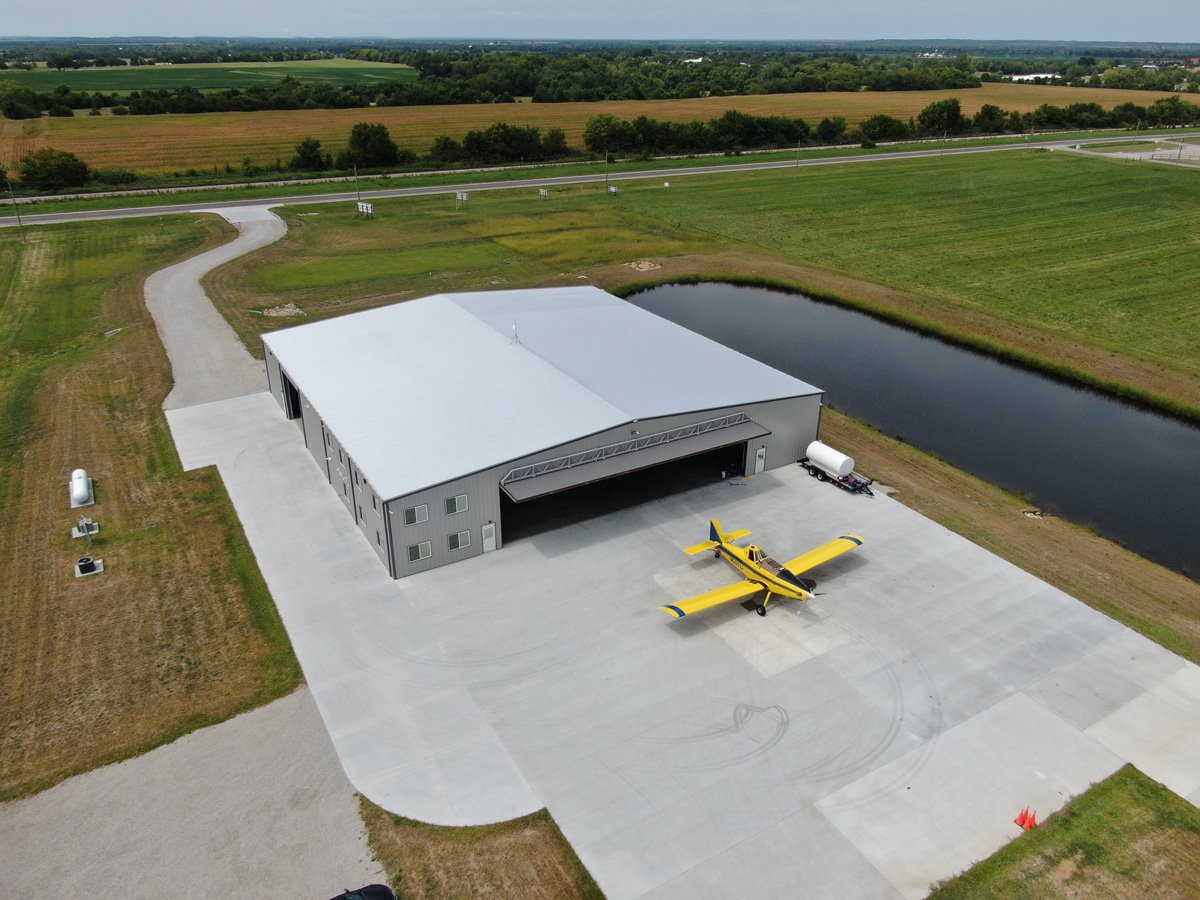
Five miles of eight-foot perimeter fence were finished at Las Cruces International Airport in October 2020, and around the same time the airport was extending utilities, lighting and taxiways on its east side to support new hangar development. It already counted about 40 box hangars and a dozen T-hangars. That is the sort of groundwork that comes before a hangar goes up: the fence, the water line, the power and the taxiway have to be there, or the building has nothing to connect to.
We build aircraft hangars for private owners, flight schools, fixed-base operators, businesses and public agencies. A hangar is a deceptively simple building, one big room with a very big door. Most of the money, and most of the risk, hides in that door, in the long-span roof that has to carry it, in the slab that has to hold an aircraft's weight on three small tires, and in the approvals that come with building on an airport. Our job is to untangle those pieces and build a hangar that works the day the aircraft rolls in.
Southern New Mexico has two active airports where this work happens: Las Cruces International, nine miles west of the central business district, and the Doña Ana County International Jetport near Santa Teresa. They differ in character, lease terms and neighbors, and we tell owners what to expect at each.
What is happening at the two airports
Las Cruces International Airport has three runways, the longest at 7,506 by 100 feet, at an elevation of 4,457 feet. A 2021 report says the airport's master plan update adds aerospace as a new focus, with phased improvements and hopes of extending two runways to 8,600 feet and 10,500 feet. The airport sits next to an industrial park, and two fixed-base operators, Southwest Aviation and Francis Aviation, operate there, along with New Mexico State University flight activity and an Army National Guard aviation company.
At the Jetport, a county-owned airport about four miles northwest of Santa Teresa with one 9,550 by 100 foot runway, a $9 million renovation was completed in 2020. Tenants include a flight academy, an air museum and a skydiving operator, and it listed 130 based aircraft in the 12 months ending April 8, 2023. In 2022, a television report said the Santa Teresa airport would receive new hangars and a cargo-only runway. Owners deciding between the two should visit both the Jetport and the Las Cruces airport, since the tenants, the neighbors and the lease terms feel quite different.
Leases, approvals and the airport as landlord
On most airports you do not own the dirt. You lease it from the airport sponsor, which in these cases is the city or the county, and the lease sets what you may build, how high, and for what use. Before design, we read the lease, the airport layout plan and the sponsor's design standards, and we meet with airport staff to learn about setbacks, taxiway access, and utility connections. Proposed construction near an airport can also trigger federal notice requirements, so we ask the sponsor early whether a filing is needed.
Do not underestimate timing. Airport approvals, utility extensions and environmental reviews can take longer than the building. We pencil these into the schedule at the start, run our permitting and entitlements work in parallel with design, and keep the sponsor updated. Owners who plan to combine hangar space with fuel sales or a maintenance shop also need to understand the added permitting steps.
Hangar types and what each requires
The smallest are T-hangars and box hangars for single aircraft, often built in rows by a developer or the airport. Mid-size hangars hold several aircraft or a small business jet, and big clear-span hangars hold multiple jets or a maintenance operation. The structure is usually a pre-engineered metal building with a long-span frame, or a hybrid with concrete walls for fire or security.
The door drives everything. Bi-fold, hydraulic and sliding doors each have different costs, clear opening heights and wind ratings, and the door header may require a deeper frame or a special truss. The slab is another item: it must carry aircraft loads and tug traffic, slope to drains, resist fuel spills and allow for floor heating if the owner wants it. We also frame offices, shops, restrooms and mezzanines inside the shell, and we run electrical service for lighting, ground power and shop tools.
Codes, fire protection and spill control
The building falls under the 2021 New Mexico Commercial Building Code, which adopts the 2021 International Building Code as amended and took effect July 14, 2023. Hangars carry their own rules for allowable area, fire separation and fire suppression that depend on the size of the hangar and the aircraft inside it. Larger hangars may require foam or similar suppression, and fuel storage or fuel-related work adds more.
Electrical work follows the 2020 New Mexico Electrical Code, with special attention to wiring near fuel vapors in shops and fueling zones. We prepare the permit set with the engineer, meet the plan reviewer early and bring the airport sponsor and fire marshal into the conversation so the design is acceptable to everyone before drawings are final.
Who builds hangars here
Private owners and flying clubs build the smallest hangars. Flight schools and fixed-base operators build mid-size ones for training fleets, maintenance bays and charter aircraft. Government and public sector owners build hangars for emergency response, military aviation and research, and universities add them for flight programs and aerospace labs.
Aerospace suppliers and light manufacturing tenants can combine hangar and shop space with a flex building, a combination that fits the aerospace focus added in the Las Cruces airport master plan update. Whatever the owner, the building has to work for the aircraft and for the neighbor in the next hangar.
Planning a hangar in southern New Mexico?
Tell us the aircraft, the airport and the lease. We will help you size the door, check the approvals and put a price on paper.
Questions Owners Ask
How wide and tall does a hangar door need to be?
Measure the largest aircraft you expect, including tail height and wingspan, then add margin. A door that fits today's plane may be too small for the next one, so many owners size up. The door and its structural header are the most expensive single elements, so we price a couple of sizes.
Do I need airport approval before I design?
Yes. Airports have layout plans, setback rules and lease terms, and the sponsor must approve the site and often the design. We contact airport staff in the first week, which saves redesign later.
Can a hangar be heated or cooled?
It can. Radiant floor heat is popular for workshops, and evaporative or mechanical cooling helps in summer. Large hangars are hard to condition fully, so many owners limit conditioning to shop and office zones.
What kind of slab does a hangar need?
One designed for aircraft wheel loads, typically thicker than a warehouse slab, with slope to drains and a smooth, sealed surface. If you plan to work on aircraft inside, we also discuss fuel and oil resistance.
How long does a hangar take to build?
Small box hangars can be done in a few months once permits are in hand. Larger clear-span hangars take longer because of door lead times and steel packages. The airport approval process often takes longer than construction.