General Contracting Services
General Contracting
Las Cruces, NM
Las Cruces, NM
Site Development and Utilities in Las Cruces
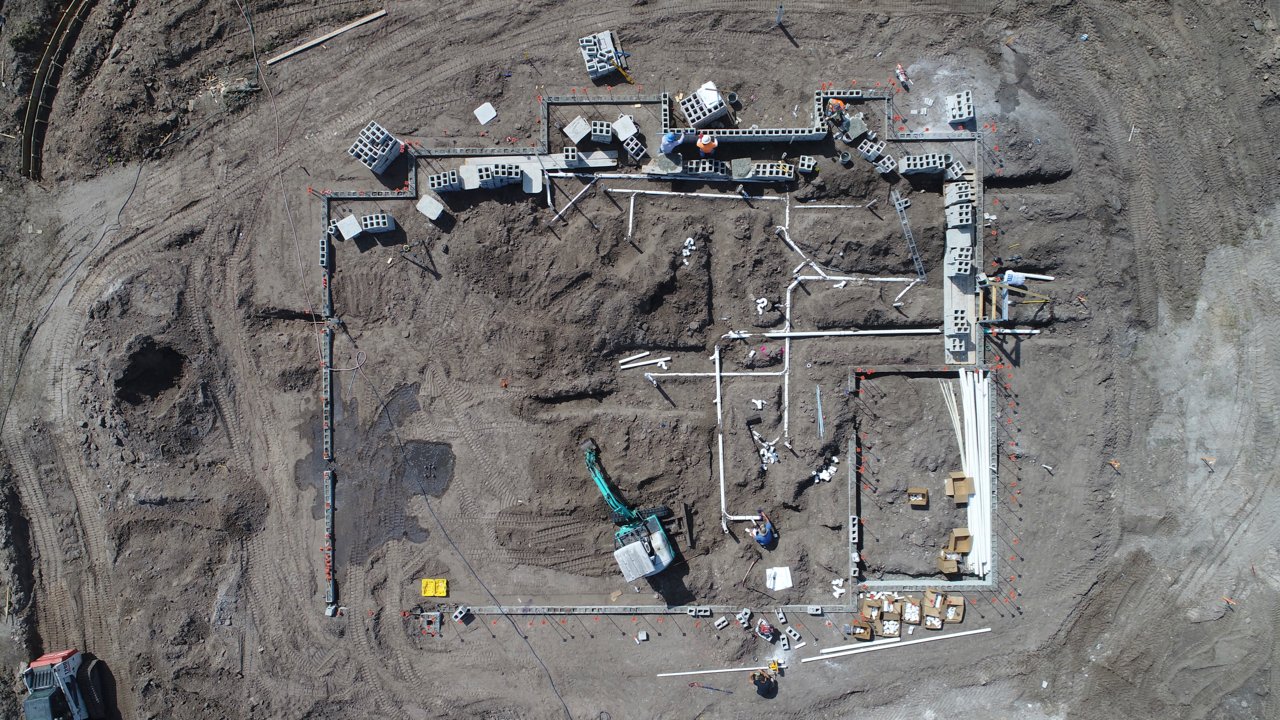
The arroyos around Las Cruces are dry streams that often carry water after heavy thunderstorms, and that one fact shapes every grading plan we draw. A parcel that looks flat and harmless in April can run a foot of water across the back corner in August. We read the ground for the paths water already takes, and then we build the site so it keeps taking them without carrying mud into the building.
Site development is everything that happens before a building can start and everything outside its walls when it is done: clearing, grading, drainage, utilities, roads, curbs, paving and the connections to city, county and utility systems. Owners tend to treat it as a line item to squeeze. We treat it as the part of the job that most often decides whether the schedule holds.
We prepare sites for commercial, industrial and institutional owners across the Mesilla Valley, from infill lots in town to larger parcels out near the interstates.
Reading the land before we move it
We begin with the survey, the geotechnical report and the utility record drawings, and then we walk the site. We look at where water flows, where fill was placed before, where ditches or buried lines cross the parcel and what the neighbors' ground does in a storm. In the Mesilla Valley, irrigation matters as much as rain. The Leasburg Dam, completed in 1908, diverts Rio Grande water into canals that serve valley farms, and ditches like those cross or border many parcels. A ditch that is still in service has an owner and rules, and we contact the district early.
Wind is the other site condition. Spring afternoons in Las Cruces can be windy with blowing dust, so earthwork needs water trucks, stabilized entrances and disturbed areas that are covered or sealed. Dust control is good neighbor practice, and it also keeps the inspector happy.
Grading, drainage and the buried work
Mass grading sets the pad and the slopes, and stormwater features such as swales, inlets, culverts and detention basins carry runoff away. Our work on mass grading and stormwater drainage is designed so the pad sits above the storm path and the basin holds the volume the design requires. Compaction testing during fill placement proves the pad before foundations start.
The buried work includes water mains, fire lines, sanitary sewer, storm drains, and conduits for power, gas and telecommunications. We trench, bed, backfill and test each line, and we coordinate with the utility on taps, meters and inspections. A fire flow test is requested early, because the result decides whether a building can be sprinklered from the street or needs its own pump and tank.
Utilities set the opening date
Utility connections have long lead times, and the schedule for them is controlled by providers who are not on our payroll. We submit applications as soon as the owner approves the load, track each one and ask for written dates. Transformers, switchgear and meter sets can take months to arrive, and a building that is ready on time may still wait for power. On the Las Cruces Innovation and Industrial Park, which sits at the junction of I-10 and I-25 and lists more than 400 acres shovel ready, the utility story is simpler than on a raw parcel, but we still verify capacity before the owner commits.
We sequence the site so the building crew can start as soon as the pad is accepted. Roads and utilities that must be finished before the building are built first, and the finish paving waits until heavy construction traffic is over. That order protects the asphalt and the curbs, and it saves money.
Off-site improvements and the costs nobody expects
Owners usually plan for the pad and the pavement. The surprises come from off-site requirements: widening a road, extending a main to the property line, adding a turn lane or paying a share of regional drainage. NMSU's Arrowhead Park shows how large those items can get. A $1.5 million federal Economic Development Administration grant funded infrastructure there, including widening Arrowhead Drive from two lanes to four, completing the wastewater system and installing street lighting. A private parcel may not get a grant, so we help the owner find those costs during permitting and entitlements, before the budget is set.
Rock, groundwater, old fill and buried debris can also change the grading cost. We ask for test pits or borings where the soil report leaves a question, and we price unit rates for unsuitable material so the owner knows what an extra yard of removal costs.
Sites across the valley and the border region
We prepare sites around the Arrowhead Park area and the interstate junction, along NM 28 in the valley, and in the farm communities such as Radium Springs at the upstream end of the Mesilla Valley. Each location comes with its own utility provider, water source and drainage character.
For owners building for the commercial real estate market, we deliver a site that is ready for the building contractor, with documents that satisfy lenders and city inspectors. For owners who need only the site, we offer a clean handoff to their chosen builder.
Open trenches, stormwater permits and traffic
Open trenches are the main safety exposure, and we follow shoring, sloping and ladder rules for every excavation. We locate buried utilities before digging and mark them. When work happens beside a road, traffic control plans and flaggers protect the crew and the public.
Projects that disturb an acre or more generally need a stormwater pollution prevention plan, with erosion controls such as silt fence, inlet protection and stabilized entrances inspected after rain events. We keep the plan current and maintain the inspection log, because a thunderstorm can test a site within an hour.
Have a parcel to evaluate?
Send us the survey and the address and we will tell you what we see on the ground and what the site work is likely to take. We are glad to walk it with you.
Questions Owners Ask
How early should utility applications go in?
As early as the load and location are known, often before the design is complete. Providers set their own schedules, and power in particular can take longer than the building. We track every application and report dates to the owner.
What do I do about an irrigation ditch on my parcel?
Identify the owner and the rules first. Some ditches can be piped, relocated or crossed with an agreement, and others must stay open. We contact the irrigation district before design, because a late conflict can change the site plan.
How do you handle summer storms during grading?
We grade for positive drainage at the end of every day, keep erosion controls in place and avoid leaving open trenches overnight. A storm can arrive quickly, and the best protection is a site that always drains.
Do I need a soil report before buying land?
We recommend one, or at least a few test pits. The cost is small compared with discovering poor soil after closing. The report also helps us price the foundation and the pavement.
Can the same crew build the pavement?
Yes. Paving is part of the site package, and we coordinate it with the building schedule and your parking lot needs.