General Contracting Services
General Contracting
Las Cruces, NM
Las Cruces, NM
Demolition in Las Cruces and Dona Ana County
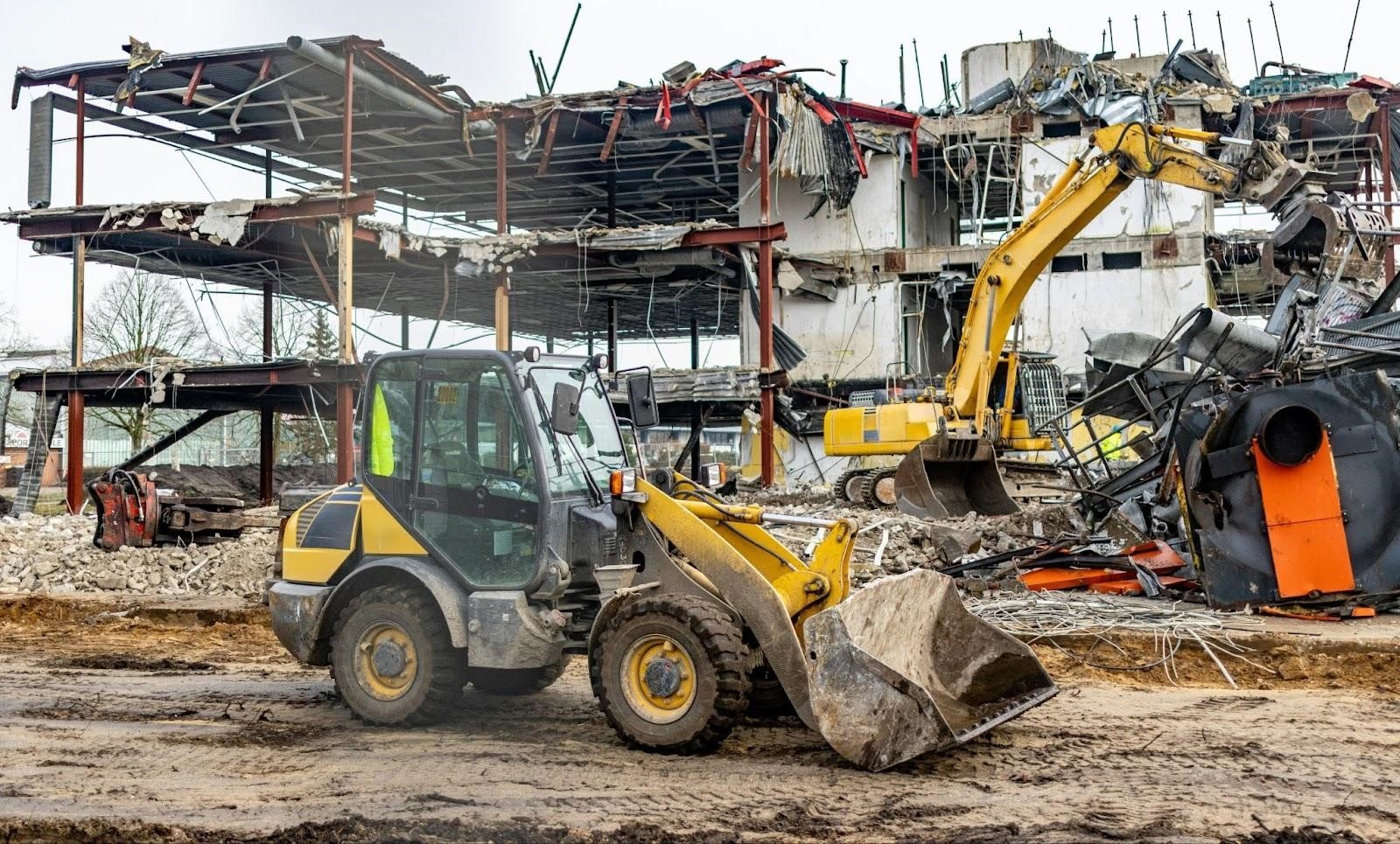
Taking a building down takes more planning than putting one up, because there is no drawing set that tells you everything that is inside. Demolition is the controlled removal of a structure, part of one, or the interior systems inside it. It ranges from a single new opening in an operating clinic to taking down a vacant warehouse to clear a pad, and either way success means nothing falls where it should not and nothing leaves the site that should not.
We handle interior selective demolition, structural demolition, slab and foundation removal, site clearing and the loading and hauling that go with them for owners across Las Cruces and Dona Ana County. The work usually sits at the front of a bigger project, clearing the way for new construction, renovation or redevelopment.
Survey, disconnect, abate, protect, remove and sort: that is the order, and skipping a step ends up costing more than doing it right.
Kinds of Demolition We Do
Interior or selective demolition strips finishes, ceilings, partitions and old mechanical, electrical and plumbing systems, and it often involves cutting slabs for new utilities or openings in walls for new doors. Structural demolition removes steel, masonry, concrete or wood-framed buildings, either whole or in sections. Site demolition takes out pavement, foundations, retaining walls and abandoned utilities. Partial demolition for additions adds shoring and temporary protection so the part of the building that stays is not harmed.
What happens after removal matters just as much. We backfill and compact holes left by foundations, grade the site for drainage and control erosion, tying the cleared ground into our mass grading work. Concrete and masonry can often be crushed and reused as base material, metals go to recycling, and we sort debris on site where facilities exist to take it. Clearing an old warehouse for a new pad is a typical example.
Hazards First
Before anything is disturbed, we survey for hazardous materials common in older buildings, including asbestos, lead-based paint, mercury-containing lamps and old electrical equipment, and we engage licensed abatement contractors where needed. Utilities are located, disconnected and capped, with the utility's written confirmation in hand. Nobody swings a hammer at a building that still has live power or gas going into it.
Structural stability is the next concern. We plan the removal sequence so the building never loses support unexpectedly, set exclusion zones, and keep a competent person on site to watch for changes. Dust and noise are controlled with water, barriers and scheduling, and near occupied buildings we monitor vibration and keep the public away. Heat is part of the safety plan too, with early starts and rest breaks through the summer.
Wind, Storms and Neighbors
Las Cruces averages only 9.14 inches of precipitation a year, and spring afternoons can be windy with blowing dust, so dust control on a demolition site is not optional. Water spray keeps it down, but the runoff has to be contained and kept out of the street. The surrounding arroyos often carry water after heavy thunderstorms, so we keep open excavations and debris piles protected from storm flow and avoid leaving unsecured material on site overnight.
Logistics decide a lot of urban projects. Work near the Main Street pedestrian mall in downtown Las Cruces means planning haul routes and truck movements around the market mornings on Wednesday and Saturday, and keeping sidewalks open. On a hospital campus, where Memorial Medical Center's main building dates to 1971, the concern shifts to infection control, noise and keeping emergency access clear. We learn those constraints before we set up.
What Moves Demolition Pricing
The biggest items are hazardous material abatement, building size and height, structure type and access. Reinforced concrete costs more to break down than a light wood frame. Disposal fees, haul distance and the sorting required also matter, as does any salvage value from steel, copper or equipment. Utility disconnects, shoring for adjacent buildings and permit costs round out the budget.
Owners such as property management firms often weigh partial demolition against complete removal, and the answer depends on what the next use needs. Taking down an obsolete wing of a manufacturing plant can free land or reduce operating costs, while careful interior strip-out may save money by keeping the structure. We show both numbers so the owner decides with full information.
A Plan Before the Equipment Arrives
Every job starts with a survey and a written demolition plan covering sequence, shoring, exclusion zones, dust control, traffic, utility disconnects and debris handling. We pull the permits, schedule the abatement, verify the disconnects and walk the plan with the crew before work begins. Photos before, during and after protect the owner and the neighbors if anyone has questions later.
Documentation closes the loop: waste manifests, recycling records, utility cap confirmations and a final site inspection. When demolition sets up a renovation, we coordinate closely with the team handling renovation and adaptive reuse so the line between what comes out and what stays is marked, agreed and respected.
Demolition as the First Step
Demolition rarely stands alone. After the building is gone, the site usually needs grading, utilities and new foundations, which is why we plan the teardown together with site development and utilities. Across Las Cruces, cleared ground may become a retail pad, a medical building or an industrial yard, and the sooner we know the next use, the better we can leave the site for it.
Licensing is part of the job. Under 14.6.6 NMAC, the GB-98 General Building classification covers erecting, altering, repairing or demolishing residential and commercial buildings, and we confirm that every firm involved holds the right classification for its work. That attention keeps the owner protected and the schedule on track.
Walk the site with us
Tell us what is coming down and what is going up, and we will survey the building, outline the sequence and give you a clear price with the hazards accounted for.
Questions Owners Ask
Do I need a permit to demolish a building?
Almost always. Permits typically cover the demolition itself, utility disconnects and sometimes dust control, and the authority will want proof of asbestos survey and abatement where applicable. We handle the paperwork and tell you what to expect.
How long does a commercial demolition take?
A small interior strip-out may take days, while a full structural demolition of a mid-sized building often takes a few weeks including abatement and site cleanup. The schedule depends on hazardous materials, access, weather and disposal logistics.
What if you find asbestos during the work?
We stop work in the affected area, isolate it and bring in a licensed abatement contractor and testing professionals. Surveying before demolition reduces that risk, but older buildings can still hold surprises, and we plan for them.
Can you demolish part of a building and keep the rest in use?
Yes. Partial demolition requires shoring, weather protection, dust barriers and sometimes temporary structural supports. We plan the cut line and the protection with the engineer and the owner.
What happens to the debris?
We sort what we can: concrete and masonry for crushing, metals for recycling, and the remainder for permitted disposal. Records show where each load went, which many owners and lenders require.